
You haven't changed a thing. Same thermostat setting, same routine, same house. So why does the energy bill look worse every time it lands?
You're not imagining it, and you're certainly not the only one. Some of the reasons are out of your hands. Others are hiding in your walls, your loft and your boiler cupboard. We'll go through both, using the latest figures from Ofgem and the Energy Saving Trust, and then look at what actually helps. By the end you'll know why energy bills keep rising and where your own home energy efficiency could be letting you down.
Short Answer : Bills go up mostly because of things you can't touch. That means the global price of gas, the cost of running the grid and the policy charges tucked inside every tariff. What you can do something about is waste. A house that leaks heat buys more units than it needs, so every price rise stings more. Keep the heat in, heat the place efficiently and make some of your own electricity, and those rises lose a lot of their bite.
Key Facts at a Glance
- From 1 October to 31 December 2026, Ofgem's price cap for a typical home using gas and electricity and paying by Direct Debit sits at £1,723 a year. That's 4% up on the summer.
- Before you've boiled a kettle, standing charges add roughly £308 a year at average cap rates.
- Gas did most of the damage this time. Typical gas bills rose 8%, while electricity barely moved because VAT on it has been scrapped for the winter.
- An uninsulated home loses about a third of its heat through the walls and around a quarter through the roof
- The order that usually pays off best is simple. Stop the heat escaping, then sort the heating, then think about making your own power.
Why Do Energy Bills Keep Rising in the UK?
Put simply, bills go up when it costs more to buy energy, move it around the country and get it to your door. Rising energy costs mostly start a long way from home, in global gas markets, grid investment and government policy. They reach you through two lines on your bill: the unit rate and the standing charge.
Ofgem resets its price cap every three months to track those costs. Around 22 million households on default tariffs are covered by it, so when the cap moves, a lot of bills move with it. For a bit of perspective, though, Ofgem points out that prices are still 52% below the 2022 peak. Back then the government had to step in and hold typical bills at £2,500.
Wholesale Gas Prices Still Set the Pace
Gas is still the big one. Ofgem put October's rise down to higher wholesale gas prices linked to the ongoing conflict in the Middle East. Wholesale prices climbed 11% in the three months before the announcement.
And it isn't only your gas bill that feels it. Gas power stations often set the wholesale price of electricity in Great Britain, so when gas jumps, electricity tends to follow. There's a delay built in too. The cap is worked out from an earlier window of prices, which is why a spike you read about in the news can take a few months to show up on your statement.
Network Costs and Standing Charges
Every home on the grid chips in for the pipes, cables and meters that bring energy in. A lot of that is collected through the standing charge. It's a flat daily fee for each fuel, and you pay it even on a day you're away with everything switched off. The grid is being upgraded to cope with heat pumps, electric cars and more renewable power. That work gets shared across everyone's bills.
Policy Costs and VAT
A slice of each bill pays for government schemes like the Warm Home Discount. Then there's VAT. Gas still carries 5%, but household electricity is VAT-free between 1 October 2026 and 31 March 2027. Without that cut, Ofgem reckons the typical bill would have been about £45 higher.
Why Using Less Energy Can Push Unit Rates Up
Here's one that catches people out. In July 2026 Ofgem revised its figure for how much energy a typical home uses. We're all using less now, roughly 7% less electricity and 17% less gas than at the previous review. Sounds like good news, and it is. The catch? Some of a supplier's costs don't shrink when demand does, so they get spread over fewer units. The unit rate creeps up for everyone as a result.
So the homes that come off best are the ones that simply need less energy to stay warm. Whatever the price per unit, they're buying fewer of them.
What Makes Up Your Energy Bill?
| Cost | What it pays for | Can you do anything about it? |
|---|---|---|
| Wholesale costs | The gas and electricity itself, bought on the open market | Yes. Use fewer units, or fix your tariff |
| Network costs | Pipes, cables and meters, plus upgrades to the grid | Not really. It's mostly fixed through standing charges |
| Policy costs | Government social and green schemes | No, though some of these schemes help pay for home upgrades |
| Operating costs and margin | Billing, customer service, metering and the supplier's profit | A little, by shopping around |
| VAT | 5% on gas, 0% on electricity until 31 March 2027 | No |
How Much Is the Energy Price Cap in October 2026?
For 1 October to 31 December 2026, the energy price cap is £1,723 a year for a typical home that uses both gas and electricity and pays by Direct Debit. That's £60 up on July's £1,663.
One thing people often get wrong: the cap isn't a limit on your bill. It limits the price per unit and the daily standing charge. Use more and you pay more. (If you'd like the full story on how the energy price cap is calculated
| Fuel | Unit rate | Daily standing charge | Standing charge per year |
|---|---|---|---|
| Electricity | 26.32p per kWh | 54.83p | About £200 |
| Gas | 7.97p per kWh | 29.68p | About £108 |
| Both fuels | Not applicable | 84.51p | About £308 |
Quick jargon check. A kilowatt hour (kWh) is what your meter counts. Leave a 1kW heater on for an hour and you've used exactly 1kWh.
Is It Worth Checking Your Tariff?
Yes, but don't expect miracles. No tariff will warm up a draughty house. What a better deal can do is shave a bit off the price you pay per unit. Ofgem says some fixed deals were available at £100 or more below the October cap, and plenty of suppliers offer cheaper off-peak electricity if you have a smart meter.
The easy win is timing. When a fixed deal ends, most people get quietly moved onto a standard variable tariff. Put a reminder in your calendar a few weeks before yours finishes.
Why Is My Energy Bill So High When Nothing Has Changed?
Usually it's one of three things. Your tariff has changed, your readings are off, or the house is losing heat faster than you realise. Run through these before you start blaming the kids for leaving the lights on.
- Has a fixed deal ended? Once a fix runs out, you'll usually drop onto a standard variable tariff at cap rates.
- Are you being billed on estimates? Estimates can be well off in either direction. Send in a reading, or ask your supplier about a smart meter.
- Has your Direct Debit gone up? Suppliers often bump payments up before winter to spread the cost over the year. Check it against what you actually use in kWh.
- Does the house go cold fast? If rooms feel chilly soon after the heating clicks off, warmth is leaking out through the walls, roof, floors or gaps.
- How old is the boiler? Most last around 10 to 15 years. Older non-condensing models burn noticeably more gas for the same heat than a modern condensing boiler.
Plenty of these take an afternoon to sort out. Our simple energy saving tips for UK homes go through the quick fixes. The rest of this article deals with the bigger stuff, the problems built into the house itself.
Where Does Heat Escape From a Typical Home?
According to the Energy Saving Trust, an uninsulated home loses about a third of its heat through the walls and roughly a quarter through the roof. Floors, windows, doors and all the little gaps make up much of the rest. Every bit of warmth that slips out has to be replaced by your boiler or heat pump, and you pay for every unit of it.
| Area of the home | Heat lost in an uninsulated home | Common fix |
|---|---|---|
| Walls | About one third | Cavity wall insulation, or external or internal wall insulation for solid walls |
| Roof and loft | About one quarter | Loft insulation to at least 270mm |
| Floors, windows, doors and gaps | Varies by property | Floor insulation, better glazing and draught proofing |
Walls
Walls are normally the biggest outside surface a house has. It makes sense that they lose the most heat.
Cavity Walls
If your home went up after the 1920s, it most likely has cavity walls. That's two skins of brick or block with a gap in the middle. Fill that gap with insulation and you've often got one of the cheapest, least disruptive upgrades going.
Solid Walls
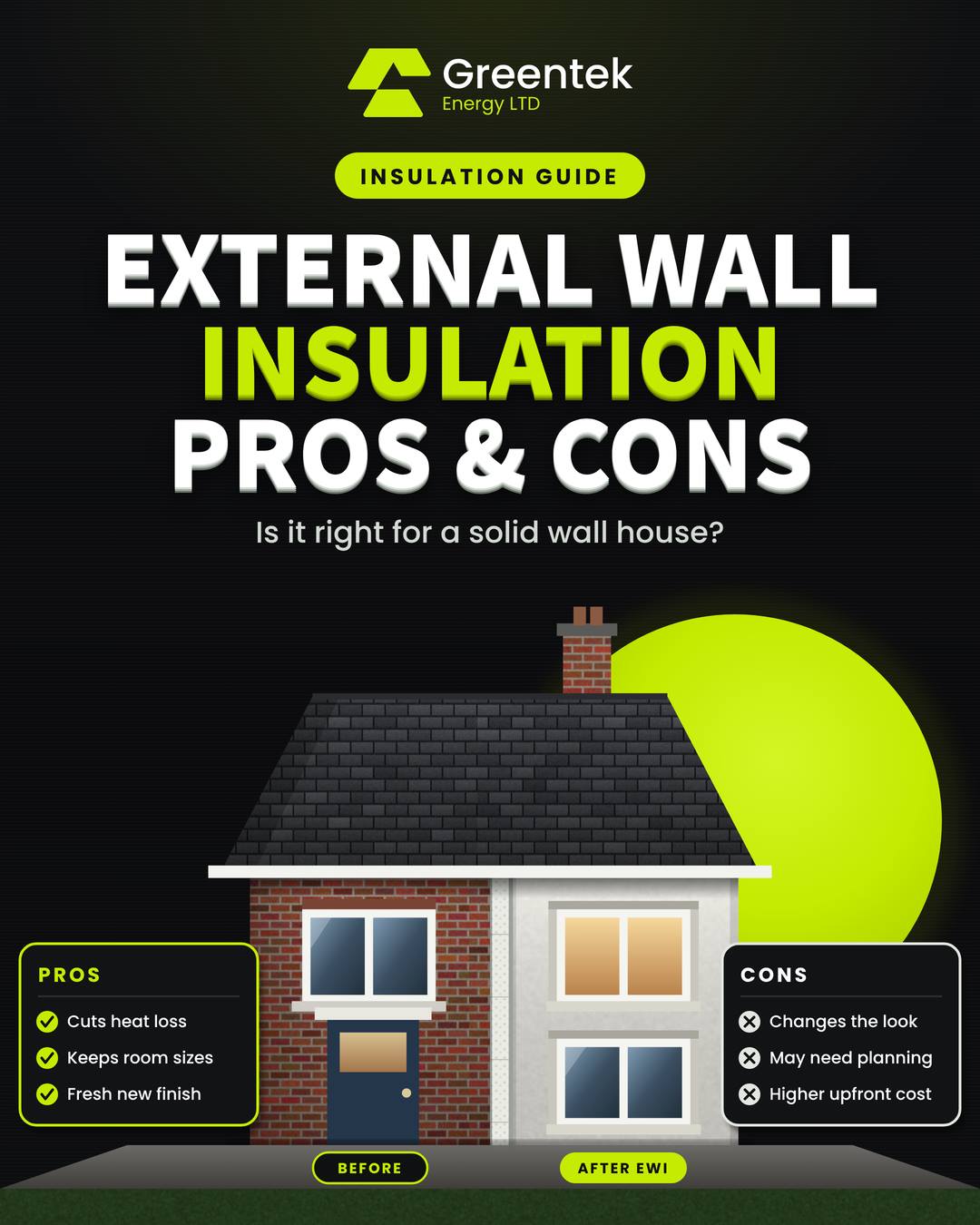
Older properties are a different story. Plenty of Victorian and Edwardian terraces around Wolverhampton, Coventry, Cardiff and Swansea have solid walls, so there's no cavity to fill. Your options are external or internal wall insulation. External insulation wraps the outside of the house in an insulated layer finished with fresh render, so you don't lose any floor space indoors. As a bonus, a tired old exterior can come out looking new. We'll go into the pros and cons in a separate piece on solid wall insulation
Roof and Loft
Heat rises, so a thin loft layer is basically an open door for it. The Energy Saving Trust recommends at least 270mm of mineral wool. Pop your head into the loft. If you can see the tops of the joists, you've got less than that.
Topping it up is usually a quick job with very little mess. Having loft insulation fitted professionally also keeps the ventilation clear, which matters because a badly ventilated loft can end up damp. Done properly, it should last around 40 years.
Floors, Windows and Draughts
Draughts are the sneaky one. Gaps around doors, windows, the loft hatch and old floorboards let warm air out and cold air in all day long. Draught proofing is cheap and often the first thing worth doing. Suspended timber floors can be insulated from underneath too, if there's a way to get at them.
How Much Does It Cost to Heat Your Home in 2026?
We ran the numbers using Ofgem's average October 2026 rates. One useful kWh of heat costs about 8.9p from a modern gas boiler and about 11.4p from an older, less efficient one. A properly designed heat pump can produce the same heat for somewhere between 7.5p and 8.8p. What makes the difference is how much of the energy you pay for actually ends up as warmth in your rooms.
| Heating system | Assumed efficiency | Cost per useful kWh of heat |
|---|---|---|
| Older non-condensing gas boiler | 70% | 11.4p |
| Modern condensing gas boiler | 90% | 8.9p |
| Heat pump, average performance | SCOP 3.0 | 8.8p |
| Heat pump, well designed system | SCOP 3.5 | 7.5p |
| Direct electric heater | 100% | 26.3p |
SCOP stands for seasonal coefficient of performance. In plain English, a SCOP of 3 means you get about three units of heat for every unit of electricity over a whole year.
So what does the table tell you? If your boiler is old and tired, replacing it cuts the cost of every bit of heat, whichever system you go for. And a heat pump only pulls clearly ahead of a good gas boiler when it's designed and fitted properly, in a home that holds on to its heat. Put it on a tariff made for heat pumps and the gap can grow.
Which Home Upgrades Reduce Energy Bills the Most?
The upgrades that reduce energy bills the most are the unglamorous ones that stop heat escaping. Better heating comes next, then making your own electricity. In the building trade this is called fabric first. The fabric is simply the walls, roof, floors, windows and doors.
Why does the order matter? Heating systems are sized to match how much heat a house loses. Sort the insulation out first and your new system can be smaller, cheaper to run and a better fit for the house. That's really what good home energy efficiency comes down to.
Step 1: Reduce Heat Loss
Loft, walls, draughts. Start there. These jobs cut your demand every single year and need next to no upkeep. You'll feel the difference too, with fewer cold corners and less condensation running down the windows.
Step 2: Upgrade How You Heat Your Home
With the heat staying in, turn to the heating. That might mean a new condensing boiler, better controls like a smart thermostat and thermostatic radiator valves, or a move to a heat pump.
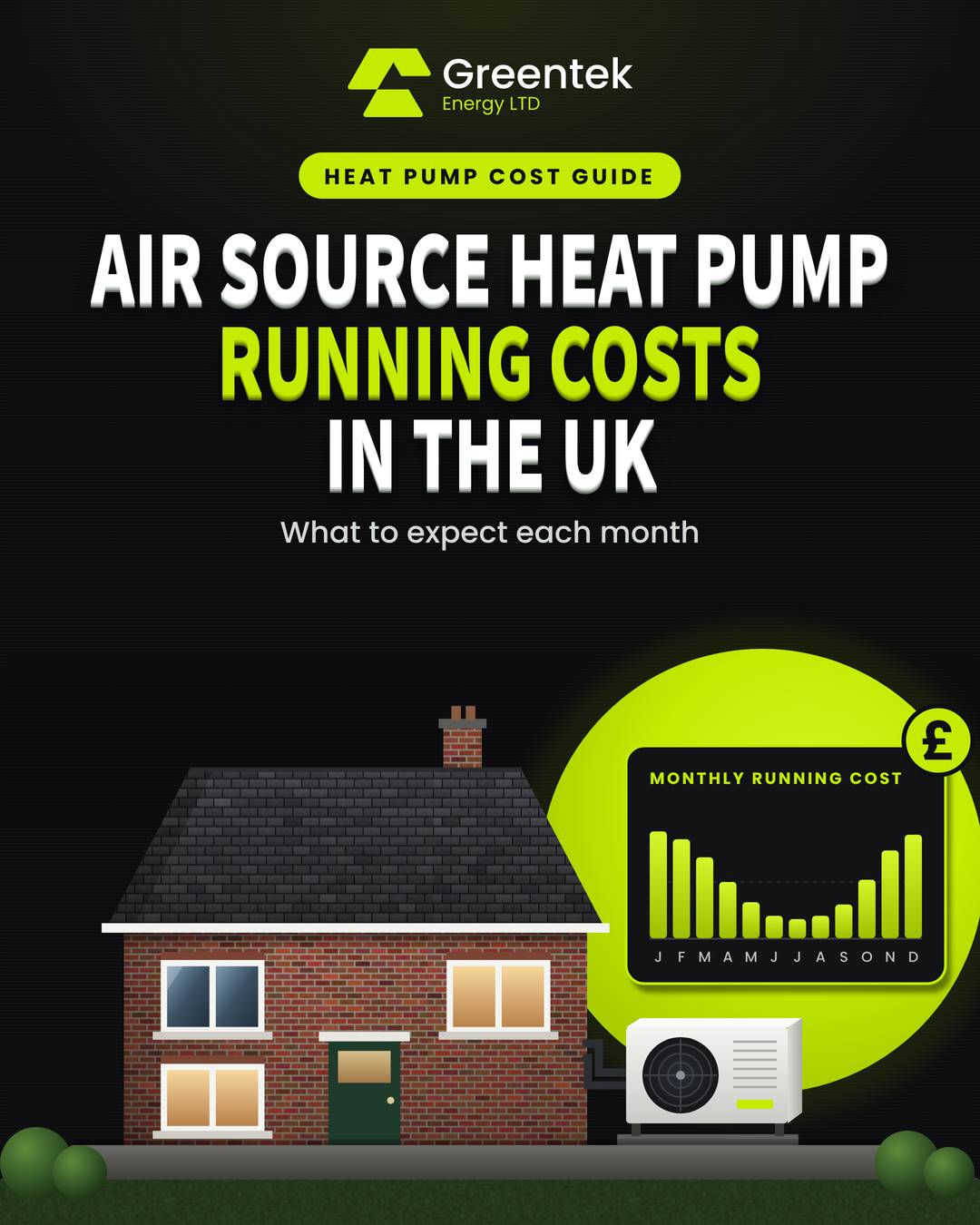
A heat pump doesn't burn anything. It pulls heat out of the outside air and moves it indoors. Homeowners in England and Wales can get a £7,500 grant towards one through the Boiler Upgrade Scheme, and eligible off-gas-grid homes can get a bit more until March 2027. You don't apply yourself, because your MCS-certified installer does it for you. A good air source heat pump installation always starts with a room-by-room heat loss calculation, properly sized radiators and the right hot water cylinder. Skip those and the running costs suffer
Step 3: Generate and Store Your Own Electricity
Solar panels turn daylight into electricity for your home. Each unit you make and use yourself is one less unit bought from the grid, which takes some of the sting out of future price rises. Add a battery and you can save the daytime surplus for the evening, when most families use the most power. Anything left over can be sold back through the Smart Export Guarantee.
Solar really comes into its own alongside a heat pump or an electric car, as it covers part of what they use. Before anyone quotes you, a proper solar PV installation survey should look at which way your roof faces, any shading, the state of the roof and how much power you use day to day.
Comparing the Main Upgrades
| Upgrade | Main problem it solves | Disruption | Support to check |
|---|---|---|---|
| Loft insulation | Heat lost through the roof | Low, often one day | Warm Homes Plan support for eligible households, Nest in Wales |
| Cavity wall insulation | Heat lost through cavity walls | Low | Warm Homes Plan support for eligible households, Nest in Wales |
| External wall insulation | Heat lost through solid walls | Medium, mainly outside work | Warm Homes Plan grants and loans as details are confirmed |
| Boiler and controls upgrade | Gas wasted by an old boiler | Low to medium | Local schemes for eligible households |
| Air source heat pump | High cost per unit of heat and reliance on gas | Medium | £7,500 Boiler Upgrade Scheme grant and 0% VAT |
| Solar PV and battery | Buying grid electricity at full price | Low to medium | 0% VAT and Smart Export Guarantee payments |
Grants and Support Worth Checking
The government's Warm Homes Plan is due to put close to £15 billion into improving UK homes. According to the Energy Saving Trust, that should mean fully funded insulation for people on low incomes and low or zero-interest loans for other homeowners. The detail is still being worked out, so check what you qualify for before you sign anything. If you're in Wales, have a look at the Nest scheme as well.
On top of that, installing energy-saving materials like insulation, heat pumps and solar panels in your home comes with 0% VAT until 31 March 2027. One word of warning. Some grants have to be in place before work begins, so raise it with your installer early
What Should You Do First? A Step-by-Step Plan
Do the free stuff first. Then get someone to survey the house properly and tell you which upgrades make sense for your home, and in what order. It stops you spending money in the wrong place.
- Check your tariff and your readings. Make sure you haven't drifted onto a pricey tariff and that your bills use real numbers.
- Have a walk round. Measure the loft insulation, feel for draughts around doors and windows, and look for cold walls, condensation or mould.
- Grab the quick wins. Seal draughts, bleed the radiators and set up your heating controls properly. It's also worth asking a heating engineer whether your boiler could run at a lower flow temperature.
- Get a proper survey. A decent one measures heat loss and ranks upgrades by how much difference they'll make. Here's how our home energy improvement process works if you want to see what's involved.
- Do things in the right order. Fabric first, heating second, solar and storage third. Check grants and VAT relief before you sign.
- Pick accredited installers. Look for MCS certification on heat pumps and solar, and TrustMark for insulation. We've written about why experience matters when choosing an energy efficiency company if you'd like a longer checklist
Questions to Ask Before You Sign
- Will you work out my home's heat loss room by room?
- Which upgrade should I do first, and why that one?
- Which grants or VAT savings can I get?
- What does the warranty cover, both the kit and the workmanship?
- Have you worked on similar homes nearby, and can I see them?
Getting Expert Help in the West Midlands and Wales
Once you know why energy bills keep rising, it's much easier to see where to put your effort. We don't expect rising energy costs to go away any time soon. The good news is that how much energy your house wastes is something you can change. Most homes need a mix of improvements rather than one silver bullet, and the right mix depends on how the place was built, how it's heated and how you live in it.
At Greentek Energy Ltd, one accredited team handles insulation, heating upgrades, air source heat pumps, solar PV, battery storage and renovation. We work with homeowners right across the West Midlands and Wales, from Coventry, Birmingham, Solihull, Wolverhampton and Dudley to Cardiff and Swansea. If you'd like to know where your home is losing energy and what's worth doing first, give us a ring on 0333 533 4567 or ask for a free consultation.