

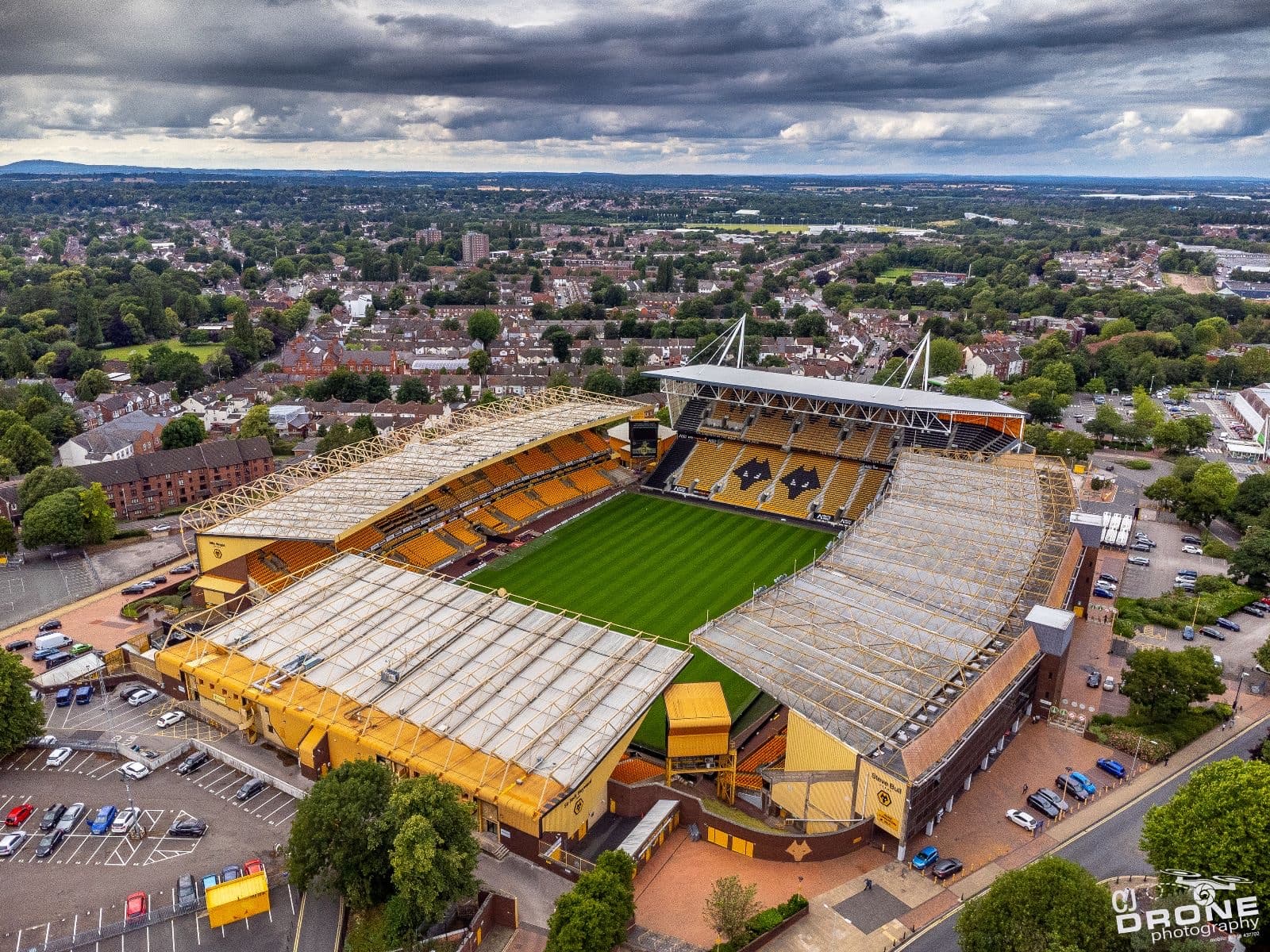


Green Belt Rules Around Wolverhampton
The city is ringed by Green Belt on its western and northern sides, and that single designation decides more jobs here than anything else. Inside it the normal permitted development allowances do not simply apply: the size of an extension is constrained, outbuildings and annexes are treated far more strictly, and schemes that would pass without comment inside the city are refused a few miles out at Codsall, Perton, Wombourne or Pattingham.
There is a second trap underneath it. A WV postcode does not mean City of Wolverhampton Council. Codsall, Bilbrook, Perton, Wombourne and Pattingham sit in South Staffordshire District, and Albrighton is in Shropshire. Different authority, different local plan, different answer to the same question. We establish the designation and the authority before anything is drawn, then handle the application, the Building Control sign-off, the party wall notices and the structural calculations, whether the job is a single storey extension, a loft conversion or a full home renovation.
Wolverhampton Housing, Area by Area
Few cities this size change character so sharply over a short distance. Tettenhall, Compton and Merridale hold large Victorian and Edwardian villas, a lot of them inside conservation areas. Whitmore Reans, All Saints and Blakenhall are dense Victorian terraces, solid walled and heavily rented. Penn, Finchfield, Bushbury and Fallings Park are interwar semis with cavities that were often never filled. Heath Town, Low Hill and Ashmore Park are post-war estate housing, some of it non-traditional construction. Perton and Pendeford are newer and already reasonably well sealed.
The right first job is different in every one of those. The interwar semis get most from cavity fill and a proper loft insulation job, because the roof is where that generation of house loses its heat. The solid walled terraces cannot be injected at all and need external wall insulation finished in render. The post-war non-traditional stock has no cavity either and needs the same approach for different reasons. Identifying which group a property belongs to takes twenty minutes at survey and decides everything that follows.
Heating a Large Victorian House
Tettenhall and Compton bring us a particular job often enough to be worth describing. A big Victorian or Edwardian house, high ceilings, suspended timber floors, original sashes, a roof void the size of a flat, and a heating bill the owner has stopped looking at. The instinct is to replace the boiler. That is almost always the wrong place to start, because a bigger boiler heats the same escaping air slightly faster.
What these houses actually need is the fabric dealt with in order: the roof void first, the floors next, draught sealing around the sashes where conservation rules rule out replacement, and only then the system itself. Once the heat loss has come down, a heating system upgrade can be sized for the house as it now is, an air source heat pump becomes a realistic option where it was not before, and a solar PV installation on a roof this size has somewhere useful to send its output. Done in that order the whole thing costs less and works better.
Working Across the WV Postcodes
The practical constraints change with the postcode as much as the housing does. The terraced streets around Whitmore Reans and All Saints have rear entries and no off-street parking, so scaffold, skips and deliveries are planned before week one. The conservation areas at Tettenhall, Compton and Chapel Ash restrict what can be seen from the street. Out in the South Staffordshire villages access is easy and the planning is the hard part. None of that is a surprise to us; all of it belongs in the quote rather than appearing later.
We work for homeowners, for landlords with single properties and portfolios, and for commercial sites on planned maintenance contracts. Landlord work here is mostly about lifting an EPC rating before a letting, which the terraced stock often needs, and we phase it around tenancy changes so voids stay short. Interior work such as a kitchen renovation or a reworked living room runs through the same team, which is the reason the building side and the energy side can be designed around each other instead of fighting.
- Green Belt status and planning authority checked before anything is designed
- Builders, electricians, heating engineers and insulation fitters all in-house
- Planning, Building Control and party wall notices handled by us
- MCS certified for solar PV and air source heat pumps
- Free survey at the property, never a price quoted down the phone
- Written workmanship warranty on every completed job
Wolverhampton is one of six areas we work in, and the same team, the same certification and the same warranty apply wherever the job is. You can see the full list on our areas we cover page, or read how we work as builders and renewable energy installers across the UK. If you would rather spread the cost of a larger job, the terms are set out on our finance page.