
The right air source heat pump settings can make the difference between a warm, affordable home and one that feels chilly while the bills creep up. The good news is that most of the work is done once. Set the system up properly, make a few small adjustments in the first cold spell, and then leave it alone.
This guide explains which settings matter in winter and what each one does. It covers your thermostat, flow temperature, heat pump weather compensation, hot water timing and the defrost cycle. It also explains which settings to change yourself and which to leave to your installer.
Key Facts at a Glance
| Question | Short answer |
|---|---|
| What room temperature should I set? | Most people are comfortable at 18 to 21°C. Change it one degree at a time. |
| Should a heat pump run all the time? | Usually yes. Steady running is more efficient than turning it off and on. |
| What does weather compensation do? | It lowers the water temperature on milder days and raises it when it gets colder. |
| How hot should my hot water be? | Around 48 to 50°C suits most homes, with a regular cycle above 60°C to control bacteria. |
| Is steam from the outdoor unit normal? | Yes. It is the defrost cycle, which usually lasts a couple of minutes. |
| Which settings should I leave alone? | Maximum flow temperature, pump speeds and the legionella cycle. Ask your installer first. |
Which Air Source Heat Pump Settings Can You Change Yourself?
Some settings are part of the system design and should only be changed by your installer. Others are there for you to adjust day to day. Knowing the difference saves a lot of trial and error.
| Setting | Who sets it | Can you adjust it? | Winter tip |
|---|---|---|---|
| Room thermostat target | You | Yes | Pick a steady temperature and leave it |
| Heating schedule and setbacks | You | Yes | Keep night-time drops small |
| Weather compensation curve | Installer, then fine-tuned | Small changes only | Adjust on a cold day, one step at a time |
| Hot water temperature | Installer | Within the range they set | Lower is more efficient if you have enough hot water |
| Hot water schedule | You | Yes | Avoid clashing with the morning heating |
| Legionella cycle | Installer | No | Leave it switched on |
| Maximum flow temperature and pump speeds | Installer | No | Call your installer if rooms stay cold |
Settings Your Installer Sets at Commissioning
When a heat pump is commissioned, the installer sets it up around your home's heat loss and the size of your radiators. This includes the maximum flow temperature, the starting weather curve, pump speeds and the hot water safety cycle. These settings protect the system and keep it within its design limits. Changing them without understanding the design can make the house colder and the bills higher.
Settings You Can Safely Adjust
Your room temperature, heating times, holiday mode and hot water schedule are yours to control. Most units come with a wall controller, and many also have an app. If you are unsure what a menu option does, check the manual or ask your installer before you change it. Keep a note of any change you make, so you can undo it if needed.
What Is the Best Heat Pump Temperature Setting for Your Home?
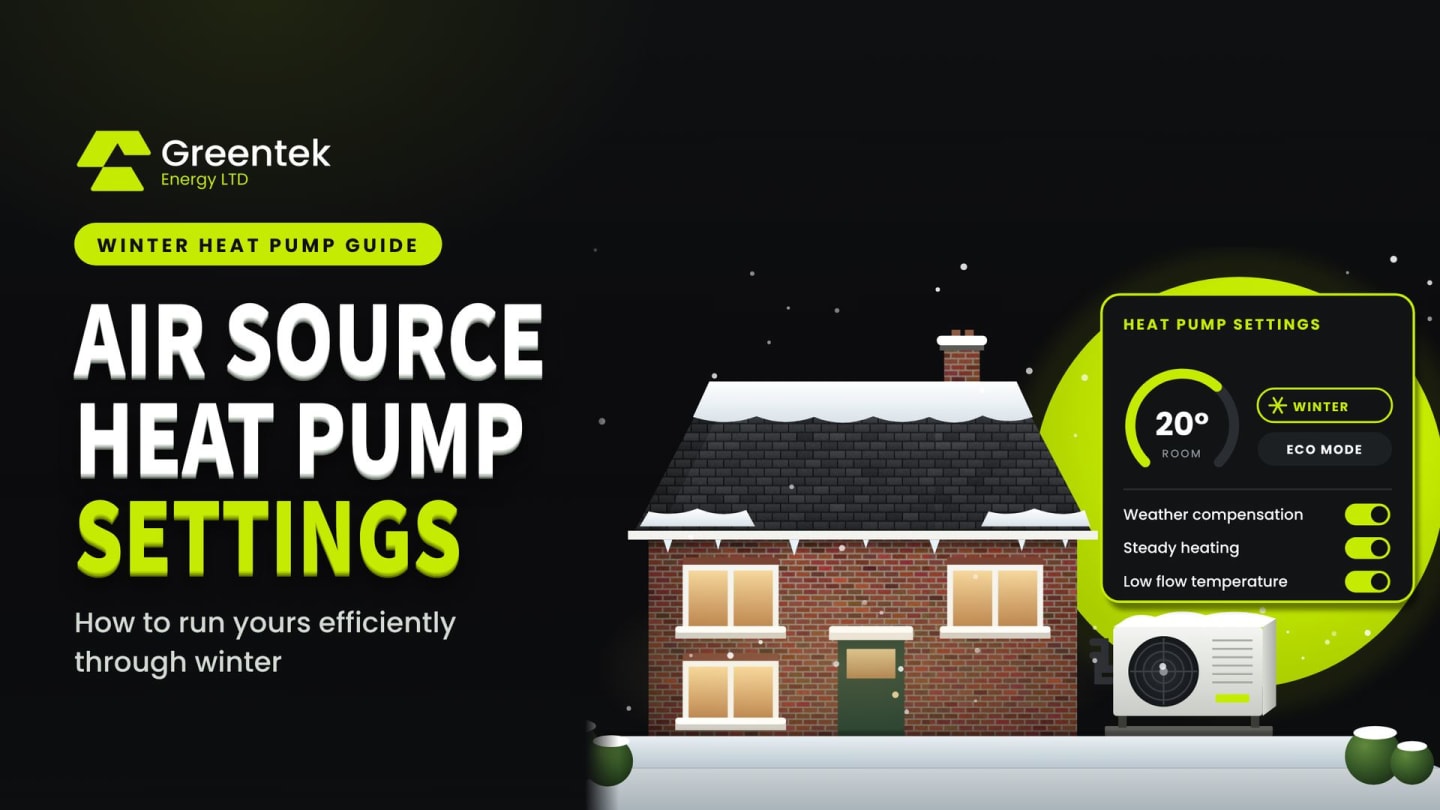
The best heat pump temperature setting is the lowest room temperature you are comfortable with, held steadily. For most people that is between 18 and 21°C. Behind the scenes, the water flowing to your radiators should be kept as cool as possible while still reaching that room temperature.
Room Thermostat
Home Energy Scotland suggests that the ideal heat pump temperature is the lowest you feel comfortable at, usually somewhere between 18 and 21°C. If you want to save energy, lower the thermostat by one degree, live with it for a few days, then decide.
Avoid turning the thermostat up high to warm a room quickly. A heat pump does not work like a gas boiler. It heats gently and steadily, so a higher setting will not warm the room faster. It will just overshoot later and use more electricity.
Flow Temperature
Flow temperature is the temperature of the water leaving the heat pump and travelling to your radiators or underfloor heating. The lower it is, the less work the heat pump has to do and the more efficient it becomes. That is why radiators on a well-designed heat pump system feel warm rather than hot.
You do not usually set the flow temperature directly. In most homes it is controlled by the weather compensation curve, which we explain below. If you would like to see how flow temperature affects your bills, our guide to air source heat pump running costs breaks down the numbers.
Thermostatic Radiator Valves
Thermostatic radiator valves, or TRVs, are the numbered dials on the side of each radiator. With a heat pump, they work best as limiters rather than controls. Heat Geek, a heating training organisation, advises opening them fully while the system is being balanced, then setting them just above the target temperature for each room.
Closing lots of TRVs at once can cause problems. It reduces the amount of water the system can move, which can make the heat pump cycle on and off. If you want a room cooler, such as a spare bedroom, turn its valve down a little rather than shutting it completely. If your radiators struggle to heat a room at low temperatures, they may be too small.
How Does Heat Pump Weather Compensation Work?
Heat pump weather compensation uses an outdoor sensor to adjust the flow temperature to the weather. On a mild day, it sends cooler water to the radiators. On a freezing day, it sends warmer water. The house stays at the same comfortable temperature while the heat pump only works as hard as it needs to.
What the Weather Curve Does
The relationship between outdoor temperature and flow temperature is called the weather curve. Home Energy Scotland gives a simple example. When it is 0°C outside, the system might send water at 50°C to keep the house at 20°C. When it is 5°C outside, it might only need 40°C to hold the same room temperature.
Your installer sets the starting curve based on your home's heat loss calculation. Fine-tuning it during the first winter is normal, because every house behaves a little differently once people are living in it.
How to Fine-Tune the Curve in Winter
Small, patient changes work best. Heat Geek recommends adjusting the curve when it is as cold outside as possible, as this sets the system up well for the rest of the year.
- Wait for a cold spell, ideally when it is close to 0°C outside.
- Check whether the house is reaching your target temperature and holding it.
- If rooms are too warm, lower the curve by one step. If they are too cold, raise it by one step.
- Leave the new setting for at least a day before judging it, as heat pumps respond slowly.
- Repeat until the house holds your target temperature on the lowest curve possible.
- Write down each change so you can return to an earlier setting if needed.
Some controllers call this the "heating curve", "slope" or "gradient". If you cannot find it, or your controller only allows installer access, ask your installer to make the change.
Signs Your Curve Needs Adjusting
| What you notice | What it may mean | What to try |
|---|---|---|
| Rooms overheat on mild days | The curve is too high for milder weather | Lower the curve one step |
| Rooms are cold on freezing days | The curve is too low for cold weather | Raise the curve one step |
| Rooms are fine but the unit switches on and off often | The system may be oversized or TRVs may be too closed | Open TRVs and contact your installer |
| One room is always cold | That radiator may be too small for low temperatures | Ask your installer to check radiator sizing |
Should a Heat Pump Run All the Time?
In most homes, yes. Home Energy Scotland advises that it is generally best to leave a heat pump on all the time. It only uses electricity when the house needs heat. Switching it off overnight lets the house cool down, so the heat pump has to work much harder at a higher temperature the next morning.
The question of whether a heat pump should run all the time often comes from experience with gas boilers. Boilers heat quickly at high temperatures, so timed bursts make sense. A heat pump is most efficient when it runs for long periods at a low, steady output. Heat Geek compares it to driving a car. You would not drive at 70mph and then stop to average 35mph.
What About Night-Time Setbacks?
A setback is a lower temperature setting for times when you are asleep or out. Some households use a setback of around 5°C. We usually suggest starting smaller, at around 2 to 3°C, because a large drop means the system must work harder to recover. This matters even more with underfloor heating, which takes longer to warm up.
If you do use a setback, check that the house is back to temperature when you get up. If it is not, reduce the setback rather than raising the thermostat in the morning.
Time-of-Use Tariffs and Pre-Heating
Some electricity tariffs offer cheaper rates at certain times of day. On these tariffs, it can make sense to warm the house slightly more during the cheap window and let it coast through the expensive period. This only works well in a reasonably well-insulated home that holds its heat. Ask your installer before setting this up, as the right approach depends on your tariff and your house.
Holidays and Frost Protection
If you go away in winter, use holiday mode rather than switching the heat pump off. Holiday mode keeps the house at a low background temperature and protects the system from freezing. Never turn off the power to the outdoor unit in cold weather unless your installer has told you it is safe. Many heat pumps rely on power to circulate water and stop the pipes from freezing.
How Should You Set Your Heat Pump Hot Water Schedule?
A good heat pump hot water schedule heats the cylinder once or twice a day, at a time that does not clash with your heating. The cylinder should be hot enough for your household but no hotter, with a regular safety cycle to control bacteria.
How Hot Should the Cylinder Be?
Heating water uses more energy than heating your home, because the heat pump must produce a higher temperature. Home Energy Scotland notes that the lower the hot water setting, the more efficient the heat pump will be. It also points out that most people add cold water to anything above 50°C anyway.
Heat Geek's guide to legionella and water temperature suggests that most homes are fine at around 48 to 50°C. If you regularly run out of hot water, raise the temperature a little or add a second heating time. Do not go below the minimum your installer has set.
When to Heat Your Hot Water
Most domestic heat pumps can heat either the radiators or the hot water cylinder, but not both at the same time. While the cylinder is heating, your radiators get no new heat. This is why timing matters.
- Avoid the morning heating peak. Heating hot water at 6am, when the house also needs warming, leaves rooms cooler.
- Consider the afternoon. The outside air is usually warmest in the afternoon, so the heat pump works a little more efficiently then.
- Use cheap tariff windows. If you are on a time-of-use tariff, heating water during the cheapest period can save money.
- Use solar power if you have it. Panels can help heat the cylinder during the day. Our guide on how many solar panels you need to run a heat pump explains how the two work together.
An Example Winter Schedule
| Time | Heating | Hot water |
|---|---|---|
| 12am to 6am | Small setback of around 2°C | Off, or on during a cheap tariff window |
| 6am to 1pm | Normal target temperature | Off |
| 1pm to 4pm | Normal target temperature | On, using the warmest part of the day |
| 4pm to 10pm | Normal target temperature | Off |
| 10pm to 12am | Normal target temperature | Short top-up only if needed |
The Legionella Cycle
Legionella bacteria can grow in warm water. The Health and Safety Executive treats water between 20 and 45°C as a risk. To control this, your installer will set a sterilisation cycle that heats the stored water above 60°C on a regular basis, often weekly. Home Energy Scotland explains that this means the cylinder does not need to be kept at 60°C all the time. Leave this cycle switched on.
Should You Use the Immersion Heater?
Most heat pump cylinders have an electric immersion heater as a backup. It is useful if the heat pump has a fault, and some systems use it for the legionella cycle. However, an immersion heater is far less efficient than the heat pump. Check your controller to make sure it is not set to heat water routinely.
What Is a Heat Pump Defrost Cycle and Is It Normal?
The heat pump defrost cycle is a normal, automatic process. In cold, damp weather, frost can build up on the outdoor unit's coil and block the airflow.
What You Will See and Hear
Mitsubishi Electric notes that frost can form even when it is in the low single figures outside, not only below freezing. In humid conditions close to 0°C, a unit may defrost several times an hour. Each defrost is usually cleared within a couple of minutes.
During a defrost you may notice:
- A cloud of steam rising from the outdoor unit
- A hiss or whoosh as the cycle starts and stops
- The fan stopping for a short time
- Radiators cooling slightly for a few minutes
All of this is normal. In colder, drier weather the air holds less moisture, so defrosts happen less often.
When to Call Your Installer
A defrost that clears in minutes is nothing to worry about. Contact your installer if you notice any of the following:
- Ice that stays on the unit for hours or keeps building up
- Ice on the fan blades or the case
- Water pooling or freezing under the unit because it cannot drain away
- The unit not restarting after a defrost
Keeping the Outdoor Unit Clear
Keep the area around the outdoor unit free from leaves, snow and stored items. Never cover the unit to protect it from the weather. It needs a free flow of air to work, and a blocked unit will defrost more often and lose efficiency.
Five Winter Settings Mistakes to Avoid
- Boosting the thermostat. Turning it up high does not heat the house faster. It wastes energy.
- Switching off overnight. Large swings in temperature make the heat pump work harder in the morning.
- Closing lots of TRVs. This restricts the water flow and can cause short cycling.
- Leaving the immersion heater on. It costs far more to run than the heat pump.
- Changing several settings at once. You will not know which change helped. Adjust one thing, then wait.
If your home still struggles to stay warm on a sensible curve, the problem may be heat loss rather than settings. A poorly insulated roof makes any heating system work harder, which is why a heat pump survey should always look at insulation, starting with the loft insulation.
Getting Your Heat Pump Settings Right From Day One
Most heat pump problems in winter come down to a handful of settings. Keep the thermostat steady. Let weather compensation do its job. Time your hot water so it does not clash with your heating. Treat steam from the defrost cycle as normal. And if something does not feel right, ask your installer before making big changes.
Good settings start with a good installation. When we fit air source heat pump installations, we design the system around a room-by-room heat loss calculation and set the weather curve to suit your home. At handover, we walk you through the controls and explain which settings are yours to change. You can read more about this in our guide to how our home energy improvement process works.
Greentek Energy Ltd installs and supports heat pumps for homes and businesses across the West Midlands and Wales. If your heat pump is not performing the way you expected, or you are thinking about switching, our team can help.